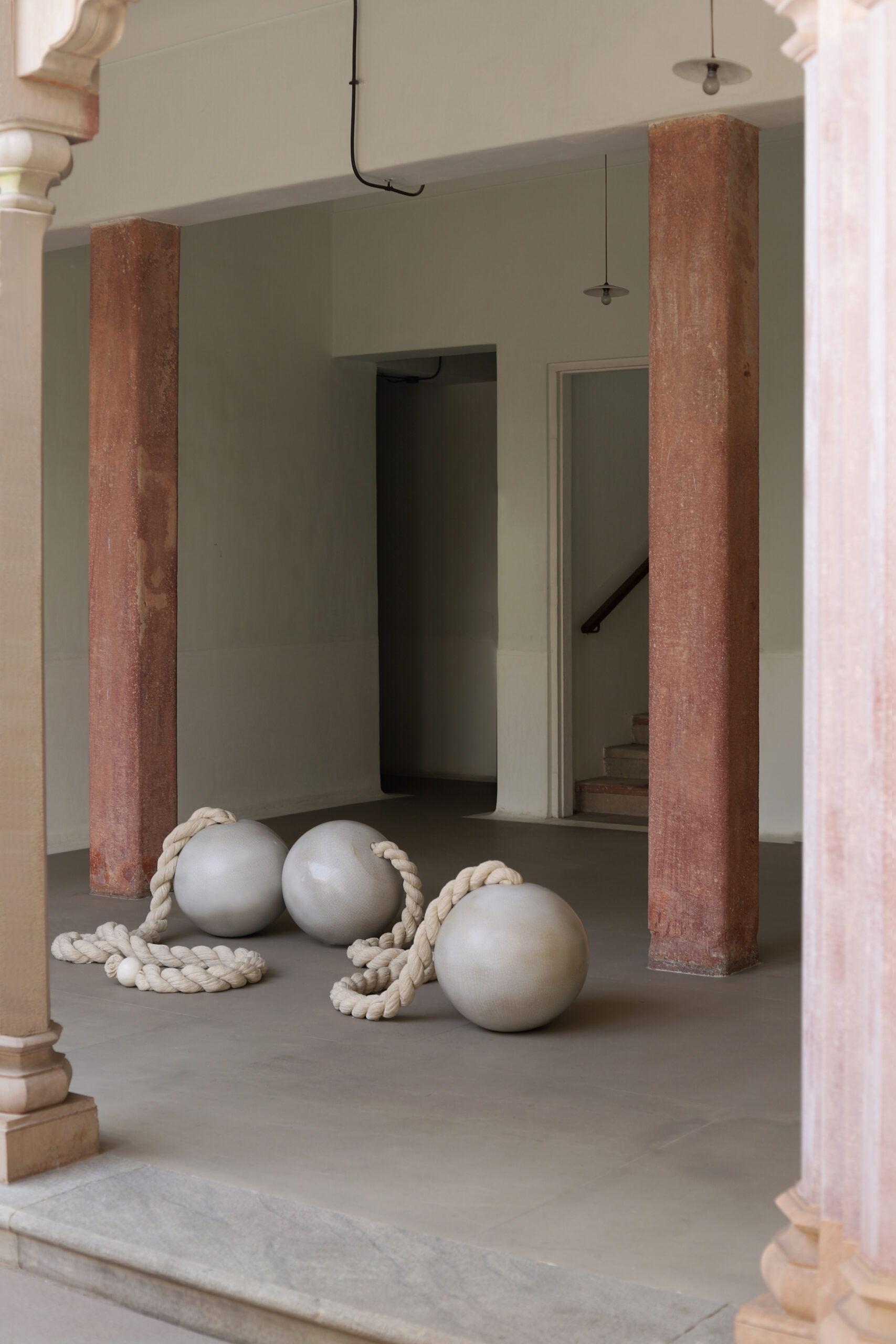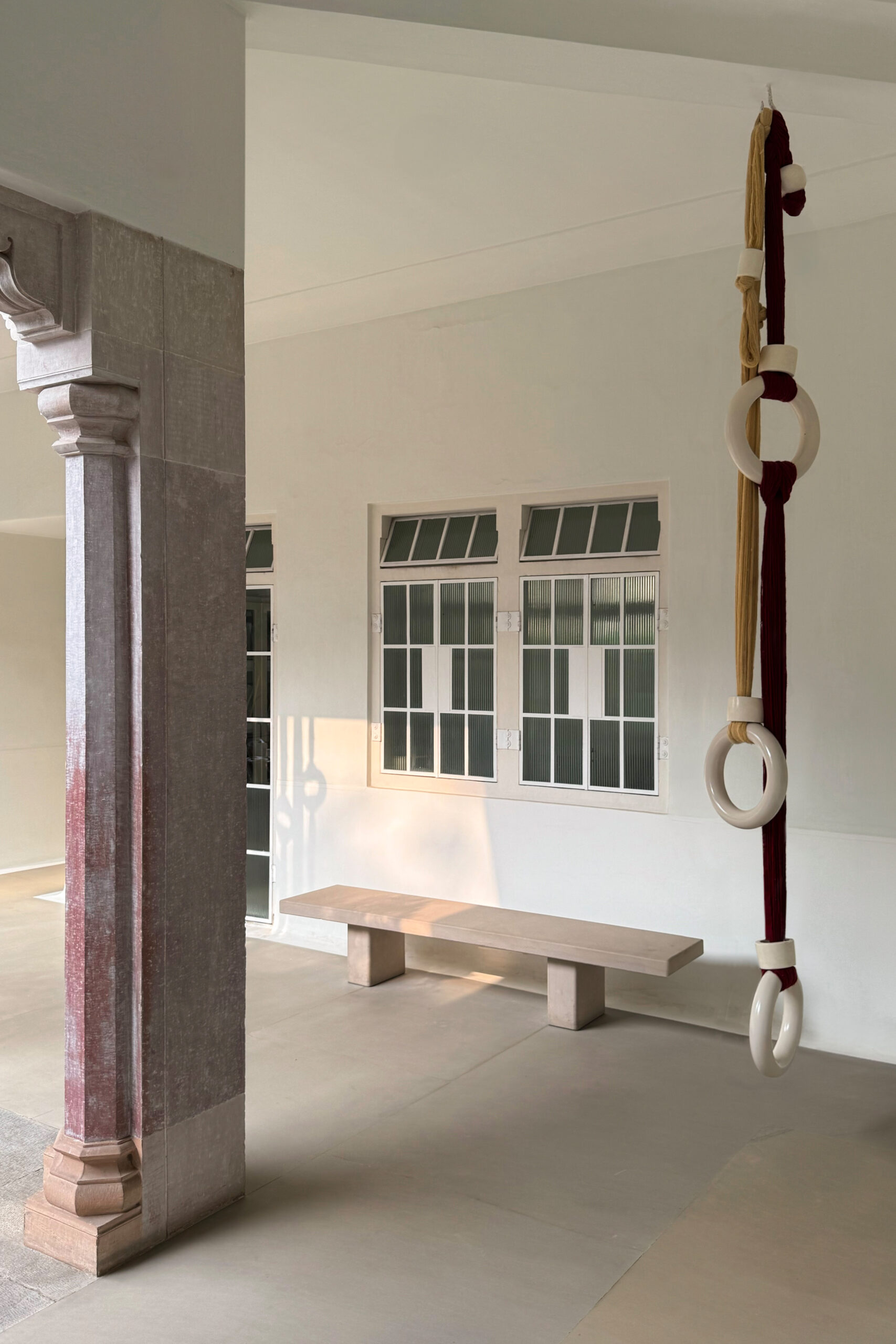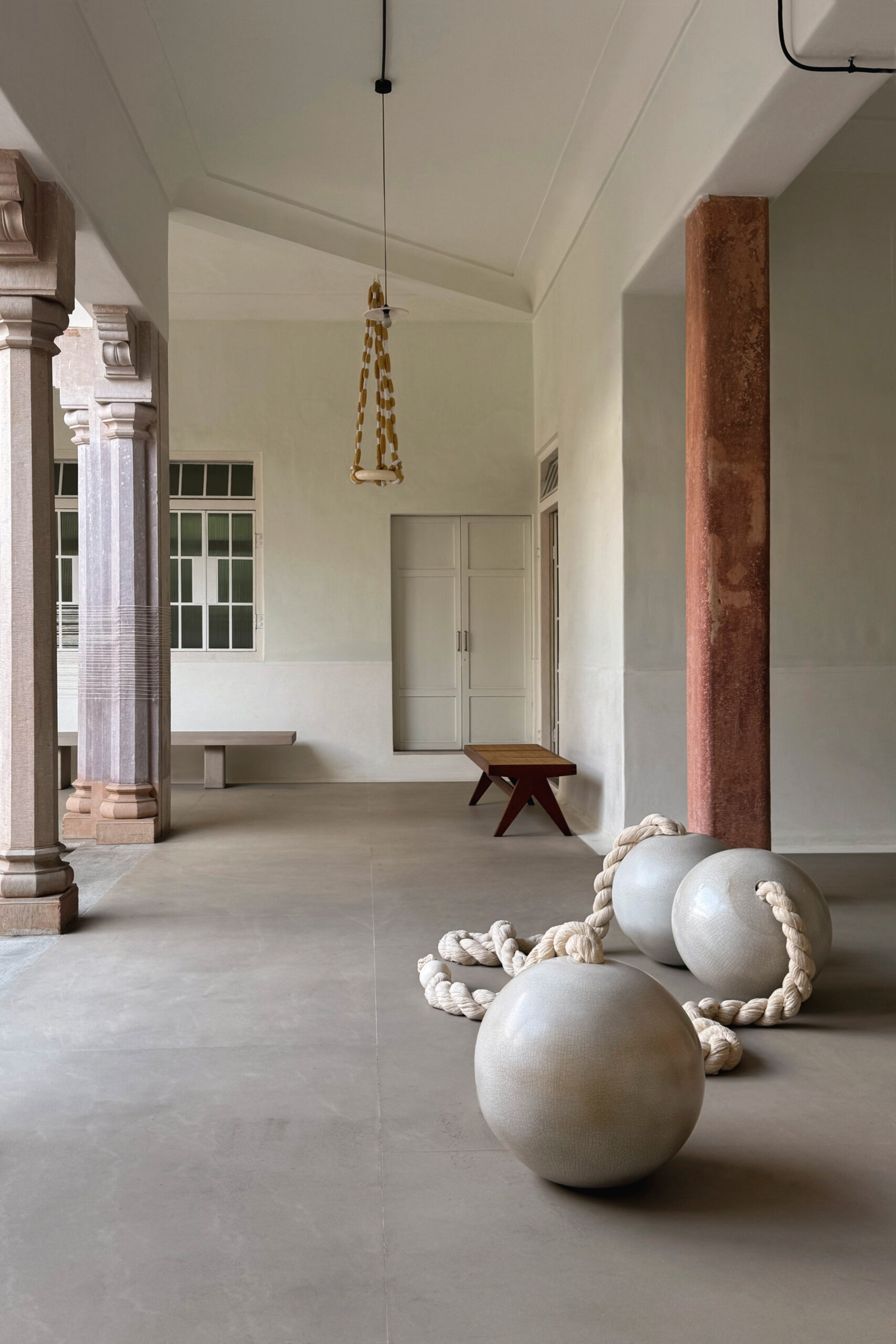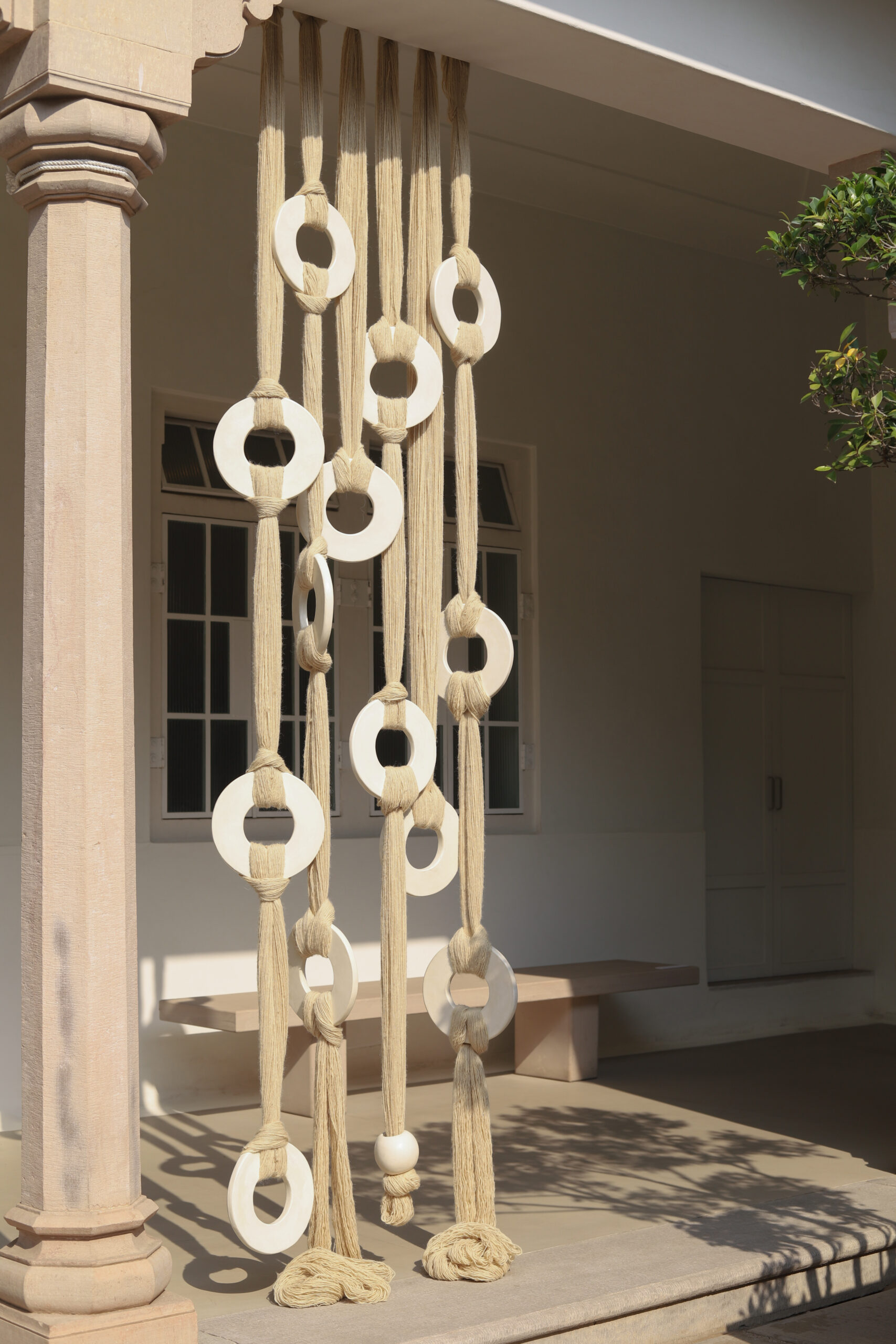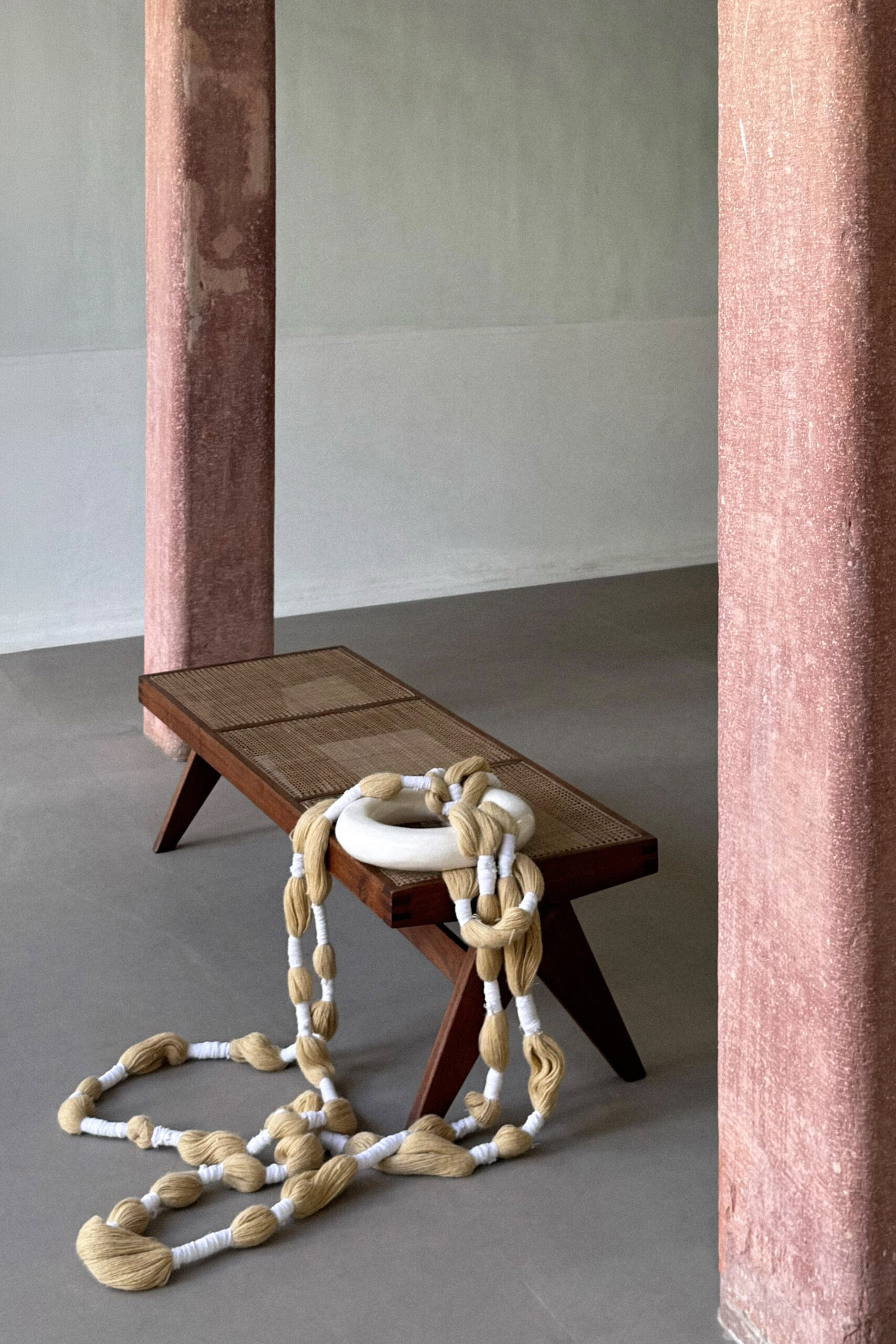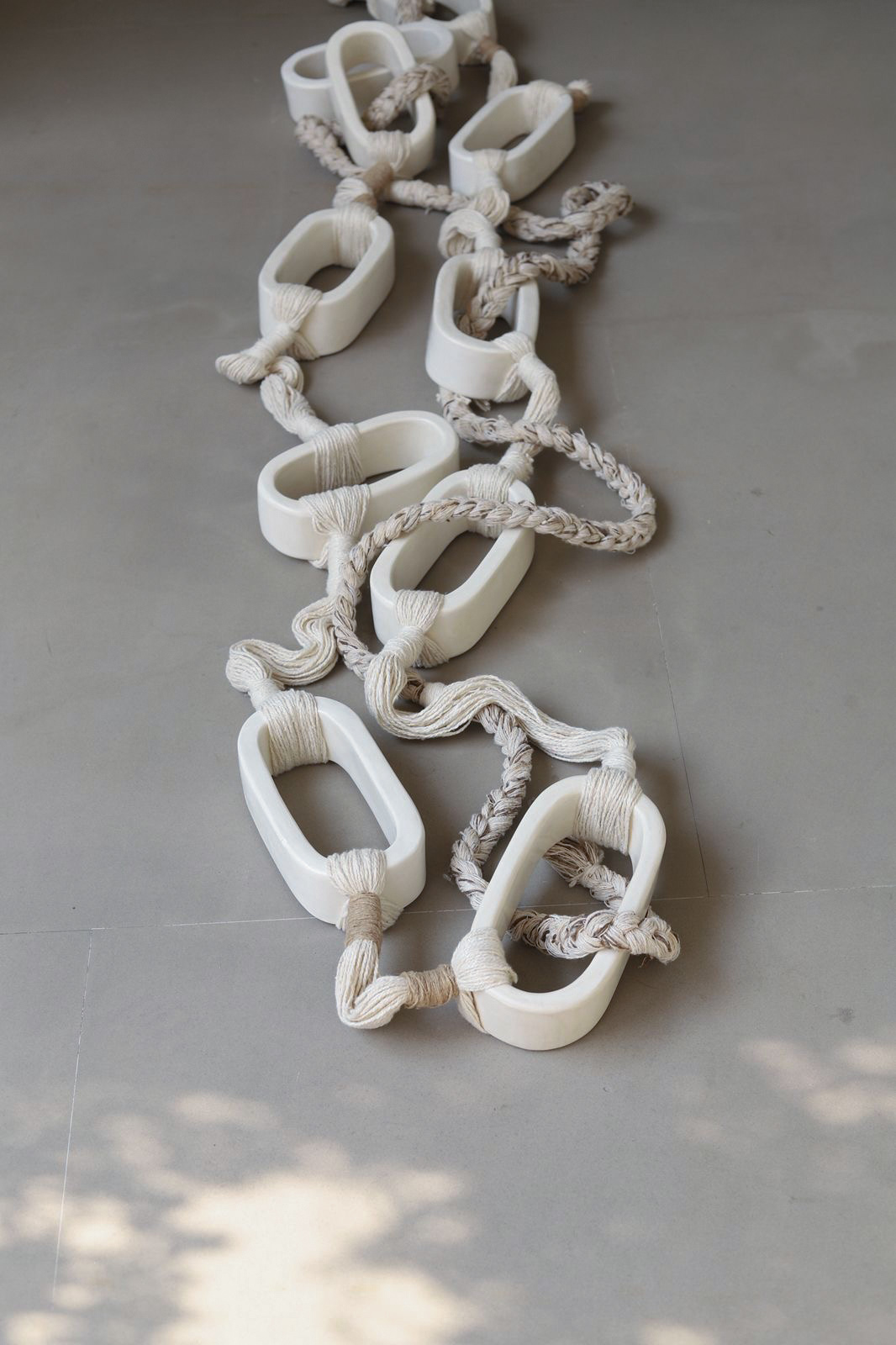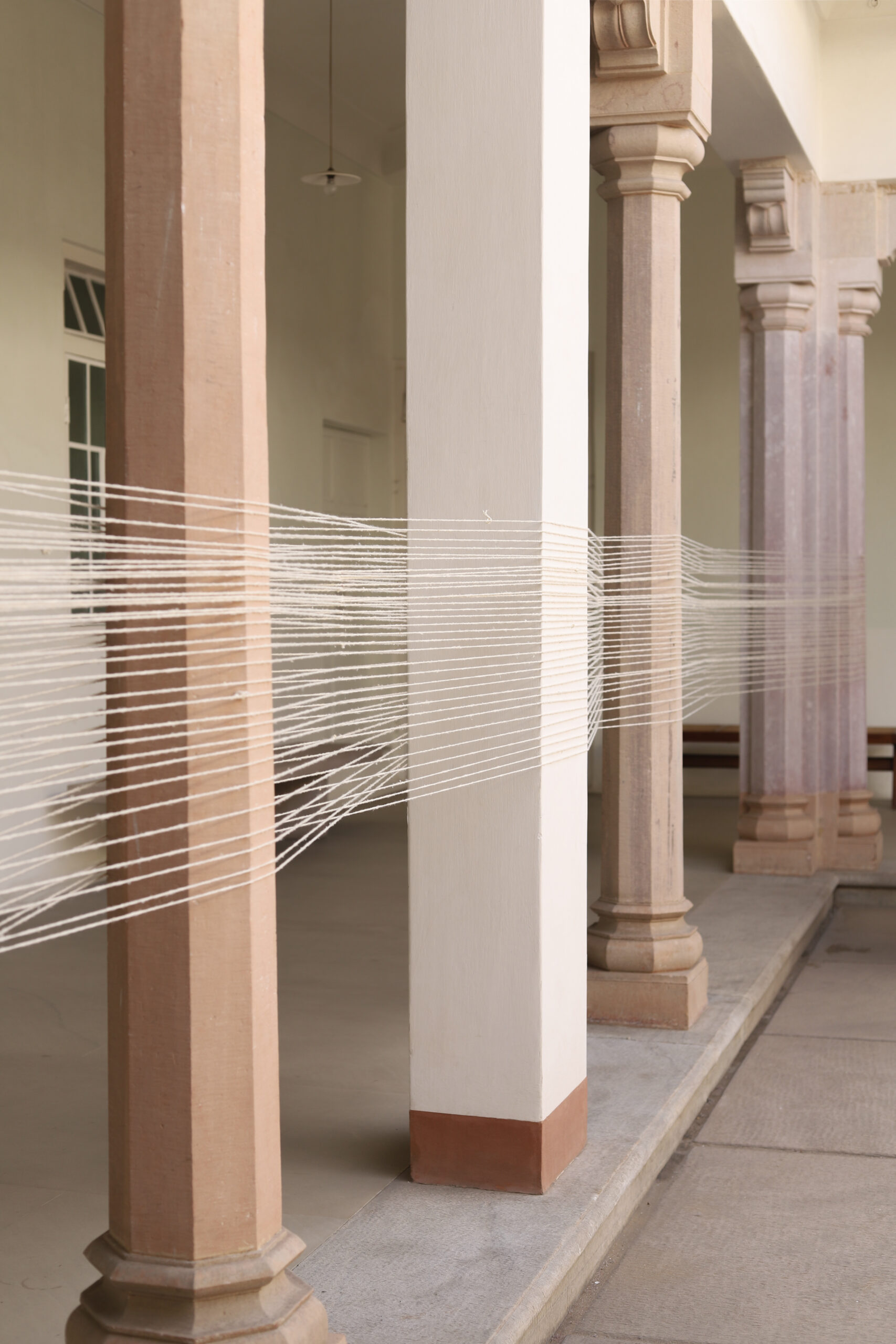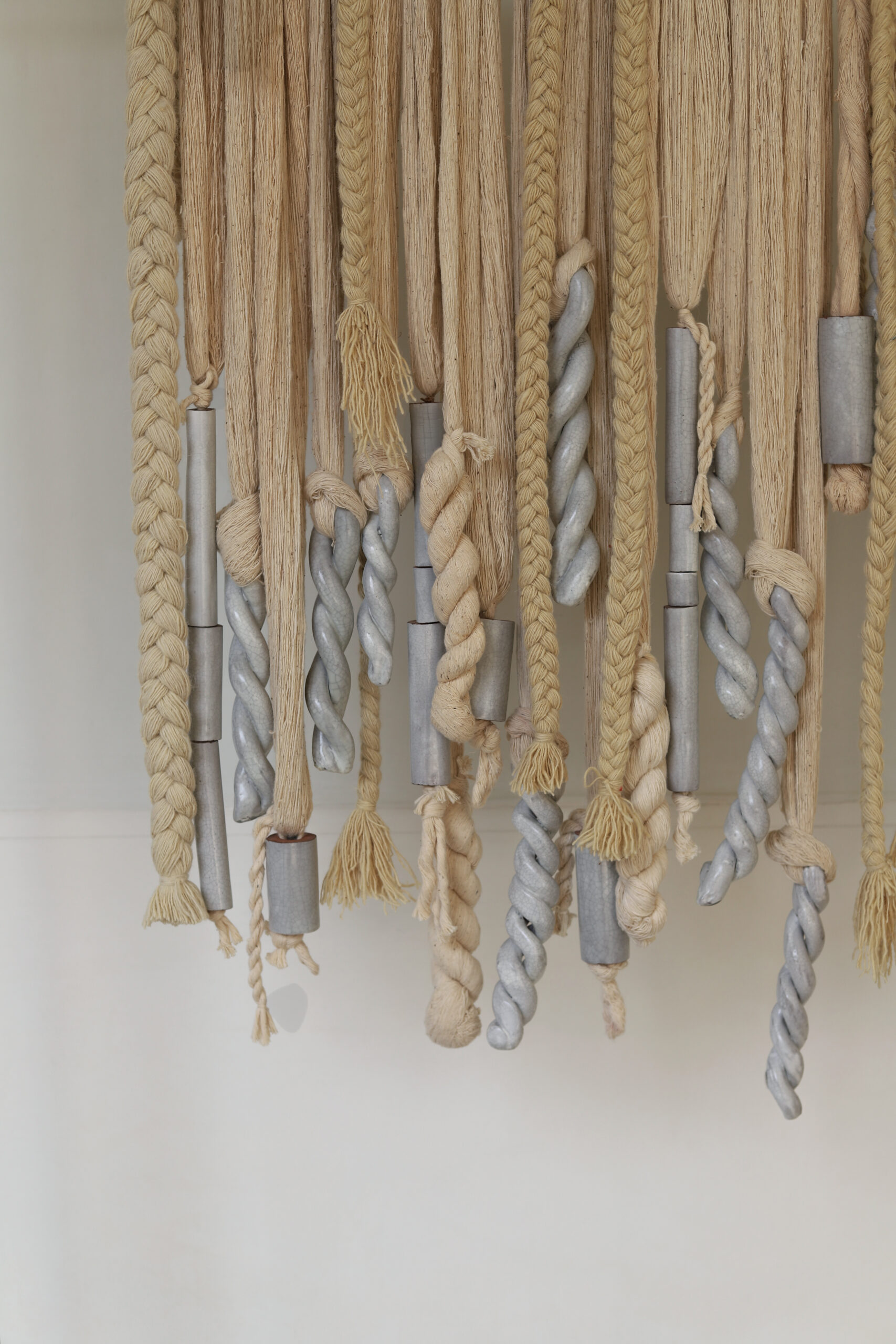
RAW MATERIALS refers to the starting point of this research: not as a fixed origin, but as a field of experimentation where matter, gesture, and time coexist in an unstable equilibrium, a given period. After three years devoted to the study of simple forms, radical compositions, and a rigor marked by symmetry – where minimalism and the domination of form over matter prevailed – my residency at Nila House marks a major shift in my artistic research. This stay opens up a new field of exploration: that of Anti-form, flexibility, and life. A shift from control to letting go, from geometry to the organic, from the fixed to the moving. The concept of Anti-Form, formulated in the late 1960’s by artists such as Robert Morris and Sheila Hicks, proposed a radical break with minimalism and its quest for formal purity. The work was no longer intended to be a stable, finished, eternal object, but became a process, a temporary manifestation of a material in tension with gravity, chance, and gesture. Here, the material is no longer subject to the artist’s will: it acts, it falls, it bends, it stretches, it lives. Form arises from a dialogue between intention and contingency, order and disorder. Working with raw materials means accepting that form is not entirely predetermined, that it is constructed over time, through contact with gravity, repetition, wear and tear, and chance. The material then becomes an active partner in the creative process, rather than a simple support. This approach is in line with a more fluid and unstable worldview, where creation is a state, not an outcome. At Nila House, a place dedicated to textile craftsmanship, this idea takes on particular resonance. Fiber, with its flexibility, memory, and inherent gravity, becomes the ideal medium to embody this concept. The workshop space is transformed into a laboratory: a place where the precision of spinning and knotting meets the unpredictability of gesture, structure and drape, calculation and chance. Between the gestures of craftsmanship and the memory of the place, the aim is to seek a form of continuity, a porosity between matter, space, and time. Materials are seen as vectors of meaning, carriers of stories, know-how, and invisible circulations.
Fiber Art has paved the way: artists such as Mrinalini Mukherjee, Magdalena Abakanowicz, and Lenore Tawney have elevated thread, rope, and fiber to the status of sculpture, transcending the art of weaving to create a monumental, political, and contemporary language. “Weaving as a metaphor,” said Sheila Hicks, weaving as a metaphor for life, connection, and continuity. This research aims to create a dialogue between two visions, two cultures: the more minimalist and monochrome Western approach and the organic and spiritual approach of Indian traditions, juxtaposed as two symbolic systems. The materials respond to each other like an ancient language, reactivated, carrying a shared memory and renewed energy. The works produced during this residency: totems, adornments, suspended or collapsed forms, create a space where stability and movement, permanence and fragility meet. The way they are assembled, suspended, or presented sometimes suggests possible relationships to the body and to use, without ever assigning them. They are made mainly from cotton, wool, jute and araish (an ancestral technique used for the rehabilitation of Nila House by Bijoy Jain/Studio Mumbai) and are presented as odes to raw materials. The material is not a fixed starting point, but a living territory, in constant transformation, where contemporary gestures and ancient memories intertwine. Thus, the work is no longer a static object but a living presence, subject to time and light, a sculpture in the making on the borderline of artifact, celebrating impermanence, cultures, and the power of the material.
RAW MATERIALS explores a cultural exchange between France and India through textile expertise and raw materials, reinterpreted within a contemporary sculptural practice, in an approach guided by sharing.